
Ultra-thin watches, a complication of pure finesse
In July 2022 Richard Mille presented a watch 1.75 millimetres thick, slimmer than a two-euro coin, sold for close to two million dollars. A few months earlier Bulgari had held the title at 1.8 millimetres. Two years later the Roman house would take it back at 1.7 millimetres. This contest fought in tenths of a millimetre is, to my mind, the finest of all watch complications, even if it never goes by that name.
A record that serves no purpose
Let us be frank about it. A watch two millimetres thick is more fragile than an ordinary one, often harder to read, sometimes trickier to wind. And on top of that, it keeps time no better than any other. Since quartz arrived at the end of the 1960s, precision has ceased to be a problem: a battery and a silicon oscillator costing a few euros will outperform the thinnest of tourbillons. The founding question of the craft, measuring time correctly, found its best technical answer half a century ago.
The ultra-thin was in fact born of that shift. Between 1979 and 1980 the Swiss makers fought a lightning battle still remembered as the thin watch war. Concord drew first with the Delirium, then its successive versions, down to the Delirium IV, which reached 0.98 millimetres in December 1980 and remains the thinnest wristwatch ever made. It ran on quartz. So thin that its bezel would bend if the strap was pulled too tight. Nobody really needed it, but it was already a demonstration for its own sake, a technical shout raised at the very moment electronics made mechanics unnecessary.
That is the backdrop. Thinness is the last field where pure technical performance still sells, because it is one of the few challenges no circuit board solves on the watchmaker’s behalf. Slimming a mechanical movement remains fiendishly hard. And in luxury, hard means precious.
Piaget and the doctrine of flatness
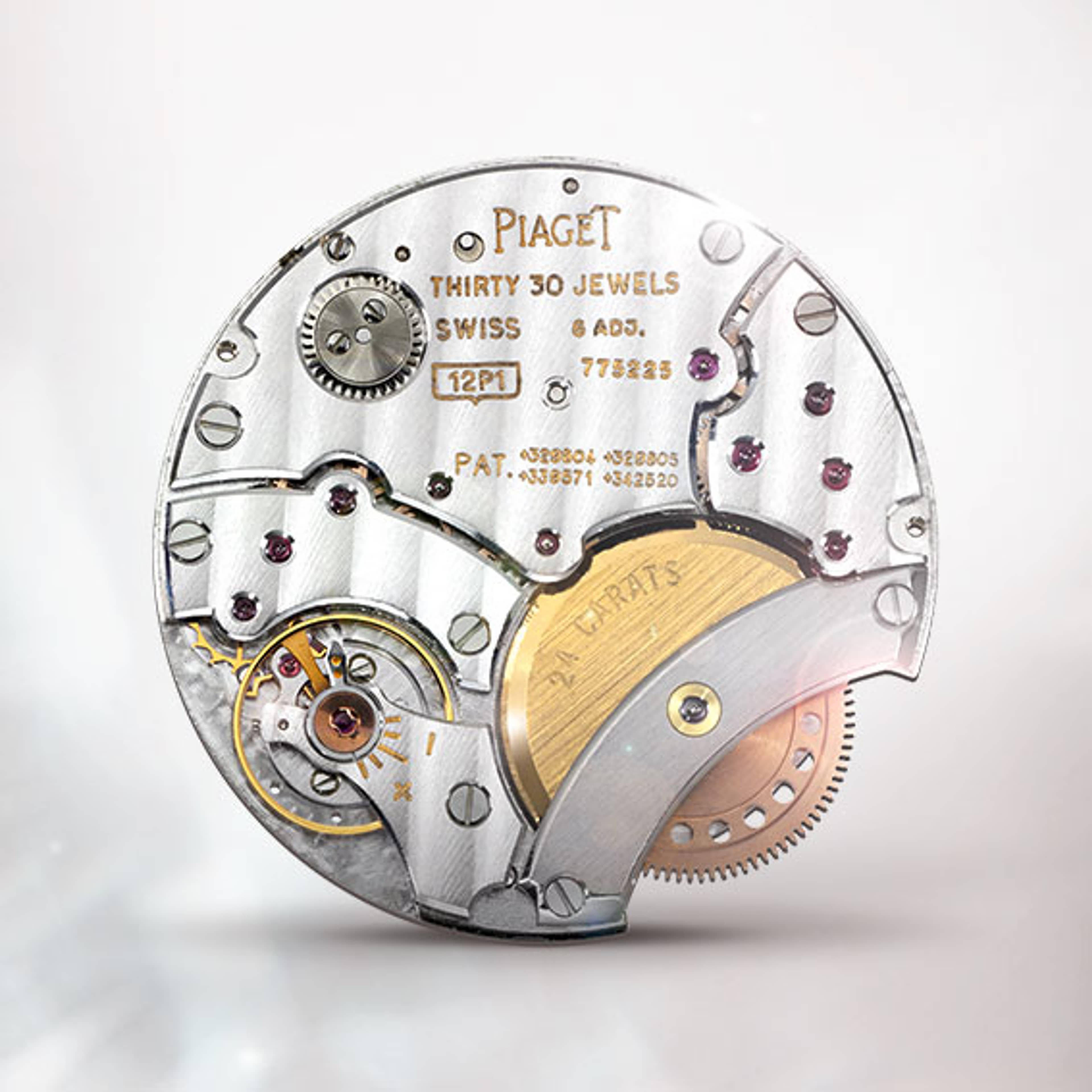
The serious story begins in 1957. That year, at the Basel Fair, Piaget unveiled the calibre 9P, a hand-wound mechanical movement two millimetres high. Some competitors cried foul, convinced that such slimness could only be an unsellable prototype. Piaget proved them wrong by putting it into series production.
Three years later, in 1960, the house struck again with the calibre 12P, automatic this time. Piaget placed the oscillating weight not above the gear train but beside it, on the same plane, in the form of a micro-rotor. On release the 9P and the 12P were reputed to be the thinnest in their category in the world. The house from La Côte-aux-Fées had chosen its signature for the next half-century.
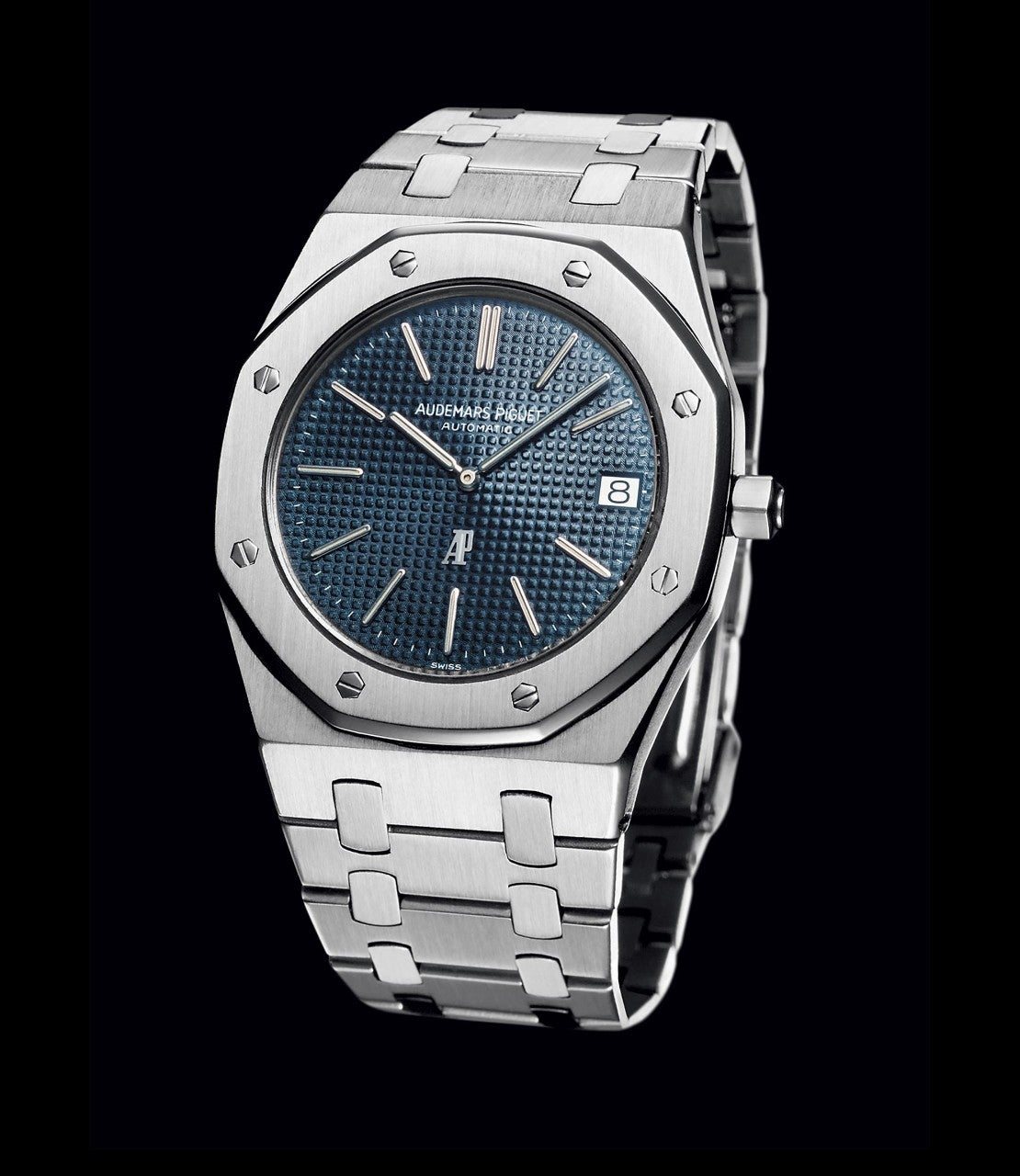
Piaget was not alone on this ground. In the Vallée de Joux, Jaeger-LeCoultre was developing in the same period the calibre 920, an extra-thin automatic movement less than 2.5 millimetres high. Jaeger never fitted it under its own name. The house sold it as an ébauche, a base movement for others to finish, to the three houses of the holy trinity, Audemars Piguet, Patek Philippe and Vacheron Constantin. Without that calibre, the Audemars Piguet Royal Oak launched in 1972 and the Patek Philippe Nautilus born in 1976 would not have had their slender profile. Thinness, here, was not yet an officially recognised record. It was a form of elegance, a house discipline.
One-upmanship in a new century
The shift to competitive sport came around 2010. Thinness stopped being a signature and became a title, with its categories, its certifications and its record holders.
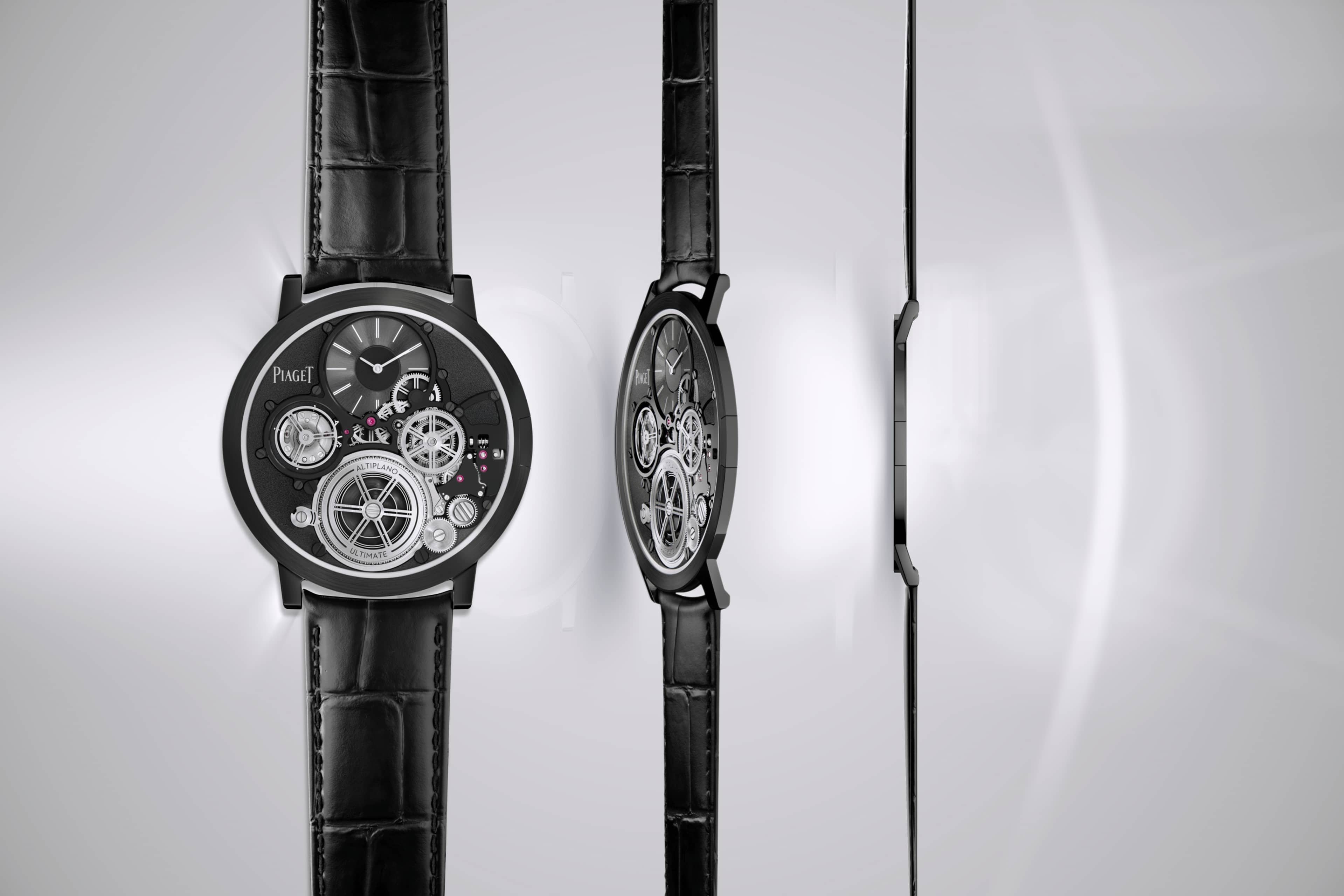
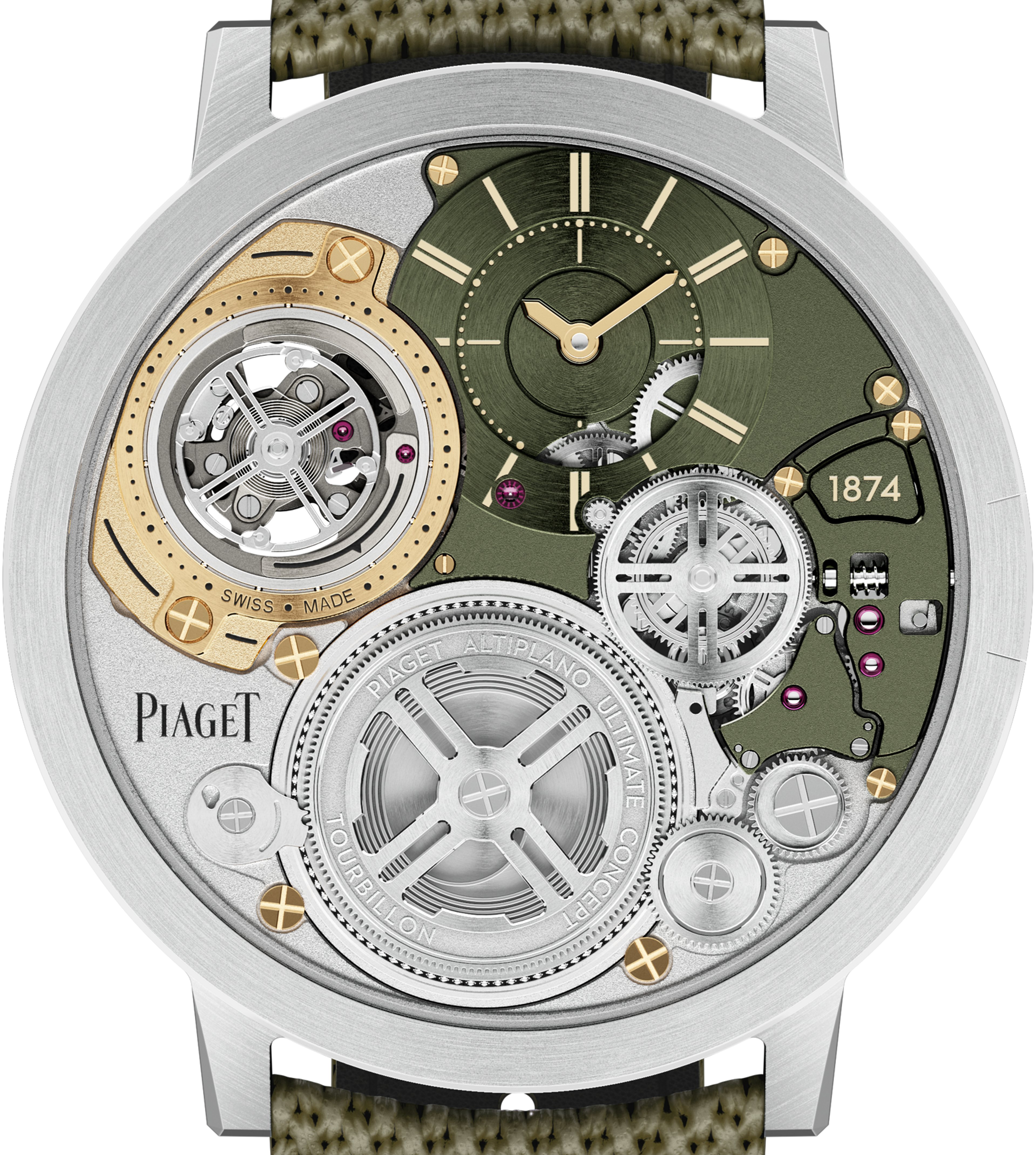
Piaget reopened hostilities. In 2018 the house presented the Altiplano Ultimate Concept, a complete mechanical watch two millimetres thick, case included, later taken into production. The feat lies in the architecture: the caseback serves directly as the movement’s mainplate, some wheels come down, according to Piaget, to 0.12 millimetres, the sapphire crystal to 0.2. Five patents were filed. In 2024, for its 150th anniversary, the house even added a tourbillon, the regulator in a rotating cage once invented to offset gravity, and claimed the title of thinnest tourbillon.
Then Bulgari joined the party and turned the discipline into a trophy cabinet. The Octo Finissimo line became a record-making machine, not on a single measure but complication by complication. The thinnest tourbillon in 2014, the thinnest minute repeater in 2016, the thinnest automatic in 2017, the thinnest chronograph in 2019. The Roman house would end up claiming some ten world records in a decade. In 2022, with the Octo Finissimo Ultra, it won the ultimate prize, the thinnest mechanical watch in the world, at 1.8 millimetres.
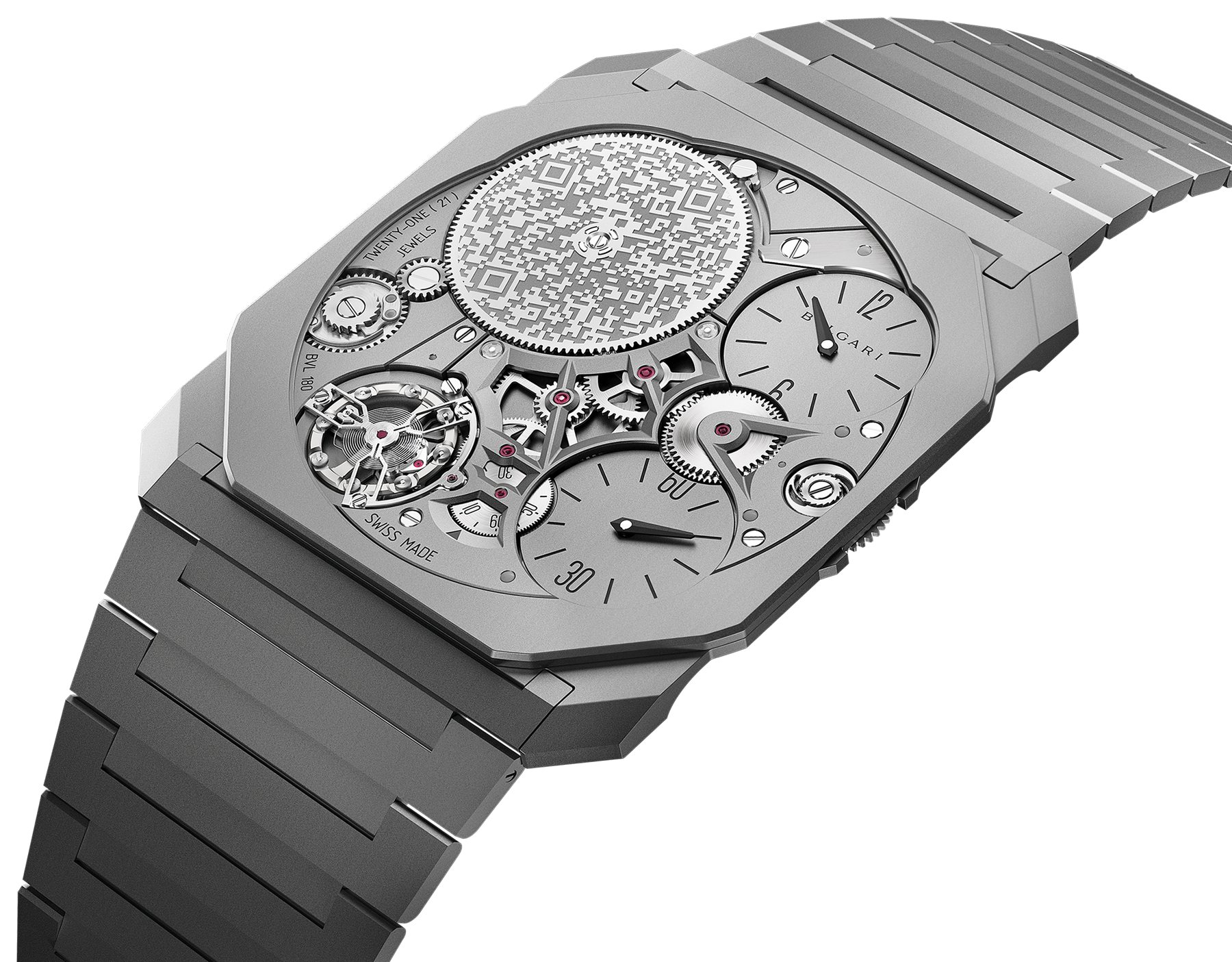
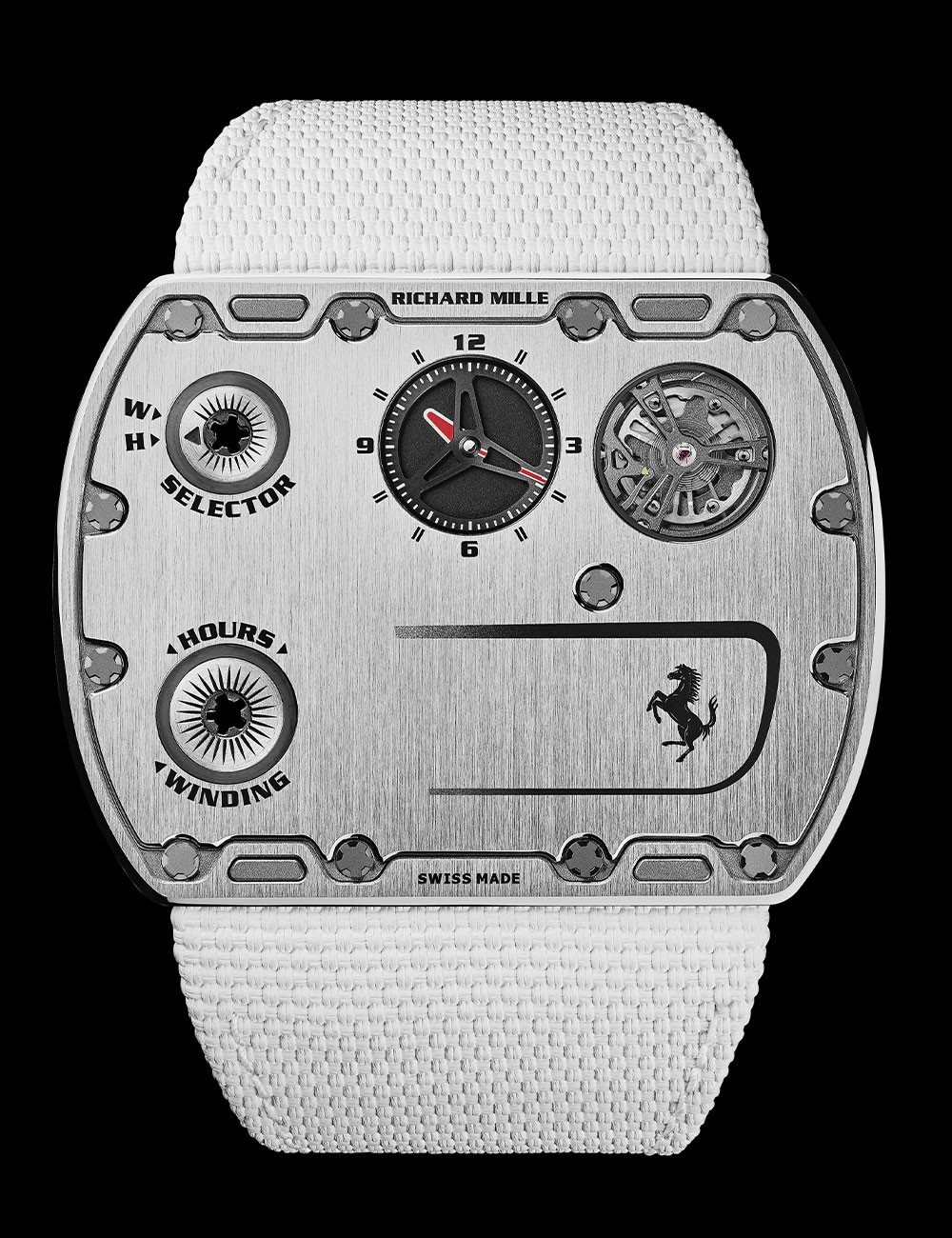
The title lasted only a few months. Richard Mille, in partnership with Ferrari, struck back in the summer of 2022 with the RM UP-01, 1.75 millimetres, winning the battle by five hundredths of a millimetre. The brand took the opposite technical route to its rivals. Rather than turning the caseback into the mainplate, it set a 1.18-millimetre movement inside a structure that Richard Mille says can withstand several thousand g of acceleration. Two years later Bulgari took back the crown with the Octo Finissimo Ultra COSC, 1.7 millimetres, adding chronometer certification, as if to prove that slimness does not rule out accuracy.
When the small beat the big
This is where the story gets interesting. This territory of the tenth of a millimetre, supposedly reserved for houses with laboratories and exceptional suppliers, remains one of the few where a lone craftsman can take on a listed group.
The precedent is an old one. In 1976, in Basel, a small Geneva outfit, Jean Lassale, presented the calibre 1200. One point two millimetres high, the thinnest mechanical movement ever built, a thinness record for a movement that nobody has beaten since. Its designer, the watchmaker Pierre Mathys, had dared to do away with the traditional bridges and to mount the arbors of the wheels on ball bearings. The company, fragile, survived only a few years before passing into other hands. But the achievement bore the signature of a handful of men, not of a multinational.
The modern echo arrived on 29 August 2024, at Geneva Watch Days. The Russian independent watchmaker Konstantin Chaykin, known for his playful dials in the shape of faces, showed a prototype named ThinKing, 1.65 millimetres, barely thirteen grams, designed and made in his own workshop. One man had just slipped beneath the records of the best-equipped Swiss houses. He made no secret of it: his watch was an avowed attempt to take the title from them.
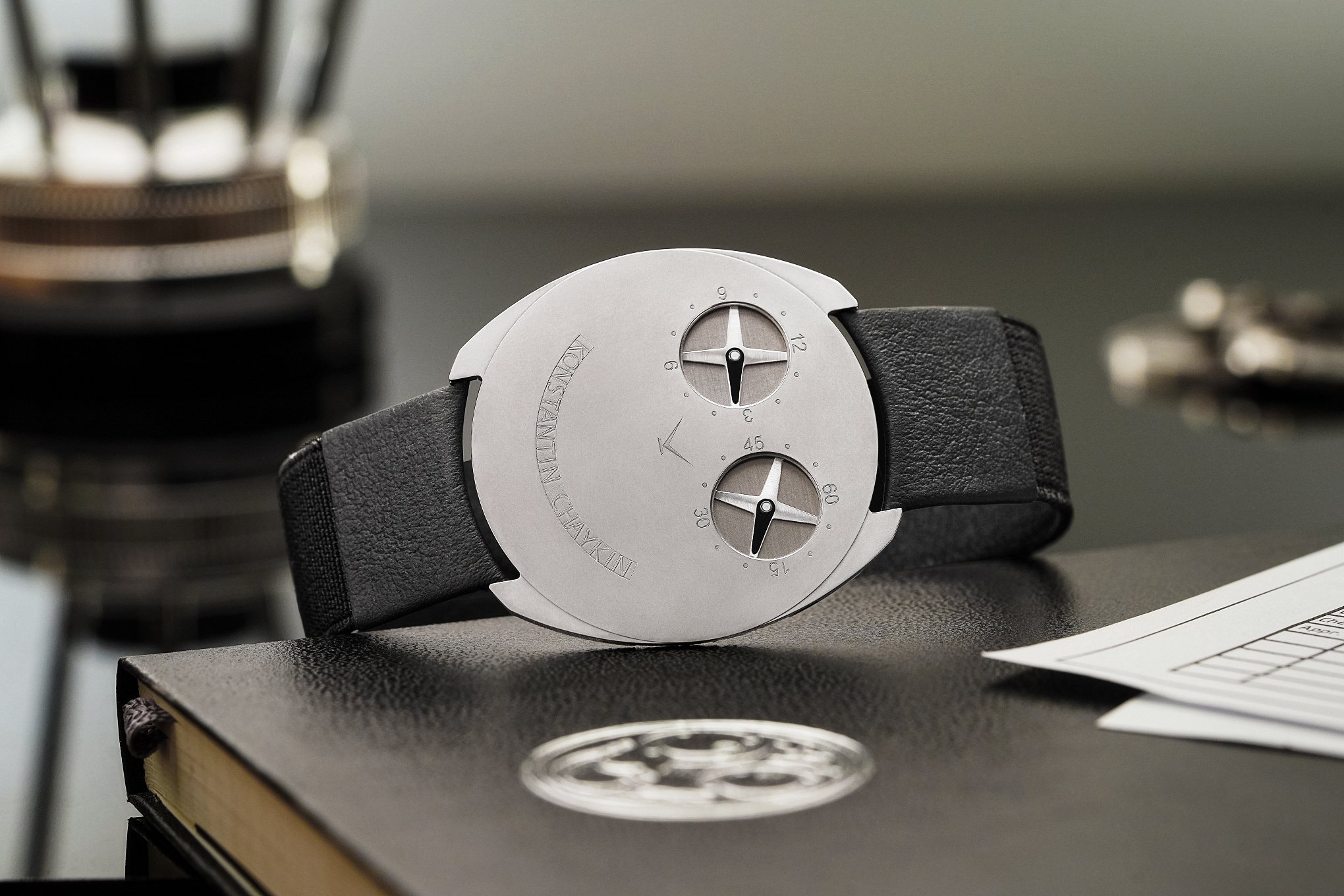
The double balance system in general has remained the same, but we have changed it considerably to optimize its characteristics.
Konstantin Chaykin, on the final prototype of the ThinKing auctioned in May 2025 (konstantinchaykin.com)
What it reveals
The race to thinness replays, almost exactly, the story of the tourbillon. Abraham-Louis Breguet conceived that mechanism around 1801 for a real problem. In a pocket watch carried upright at the bottom of a waistcoat, gravity disturbs the rate of the balance, and the rotating cage smooths out the error by averaging it. The wrist, by constantly changing the watch’s orientation, made the invention more or less useless. The tourbillon ought to have disappeared. Instead it became a show of virtuosity par excellence, a piece put under glass and billed at a premium. A useful invention turned into a spectacle.
The race to thinness follows the same logic, starting from spectacle at the outset. When an industry has settled the question it was founded on, telling the right time, the question does not go away. It becomes a new challenge and creates a competition of its own, with performances that can be measured and certified, allowing the industry to keep ranking the houses and justifying its prices. The thinness record rewards no service to the person wearing the watch. It rewards only the ability to overcome a constraint one has imposed on oneself for the pleasure of overcoming it.
And this competition supplies stories, hands over a trophy that changes hands every two or three years, and so keeps attention constantly renewed. Above all, it preserves a space where pure craftsmanship, not financial muscle, decides the outcome. A Chaykin in his workshop can beat a giant there, which almost never happens elsewhere in luxury. That is why the houses care so much about it. Thinness is the last arena where mechanical watchmaking can still prove, in public and to the tenth of a millimetre, that the hand is sometimes worth more than firepower, and that is surely also why I find this race to thinness so fascinating.
Milestones
| Date | Event |
|---|---|
| 1957 | Piaget unveils the calibre 9P, a 2 mm hand-wound movement, among the thinnest in its category |
| 1960 | Piaget calibre 12P, automatic with micro-rotor, the thinnest in its category on release |
| 1960s-1970s | Jaeger-LeCoultre calibre 920, extra-thin ébauche used by Audemars Piguet, Patek Philippe and Vacheron Constantin |
| 1976 | Jean Lassale calibre 1200, the thinnest mechanical movement ever built, 1.2 mm |
| Dec. 1980 | Concord Delirium IV, 0.98 mm, the thinnest wristwatch ever made (quartz) |
| 2014 | Bulgari Octo Finissimo, the first in a series of records by complication (tourbillon) |
| 2018 | Piaget Altiplano Ultimate Concept, a 2 mm mechanical watch |
| 2022 | Bulgari Octo Finissimo Ultra (1.8 mm), then Richard Mille RM UP-01 Ferrari (1.75 mm) |
| 2024 | Bulgari Octo Finissimo Ultra COSC (1.7 mm); Konstantin Chaykin’s ThinKing prototype (1.65 mm) |
Sources: official sites of Piaget, Richard Mille and Konstantin Chaykin; Bulgari’s official communication on the Octo Finissimo series and its successive records; Wikipedia encyclopaedia entries (Piaget SA and calibres 9P and 12P; Jaeger-LeCoultre calibre 920; Jean Lassale; Concord Delirium).
Research and writing assisted by Claude Code.