
Switzerland and China: the tariffs go, the luxury tax stays
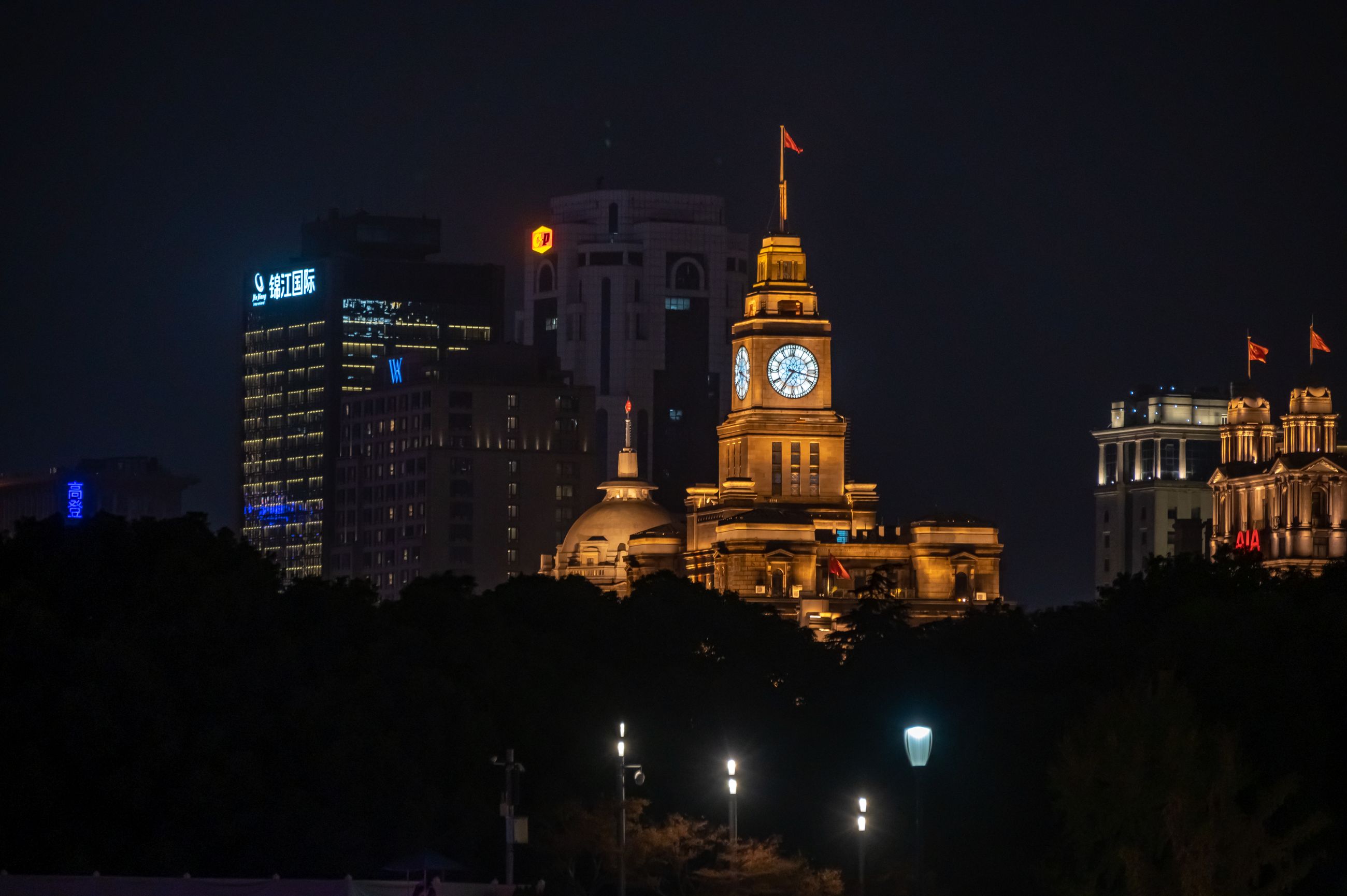
On 30 October 2026 in Beijing, in the presence of Xi Jinping and Guy Parmelin, President of the Swiss Confederation, China’s commerce minister Wang Wentao and Switzerland’s state secretary for economic affairs Helene Budliger Artieda signed the protocol that upgrades the free trade agreement between Switzerland and China. Bern singled out one figure: in time, 99.8% of Swiss exports to China will cross the border free of customs duties. According to Keystone-ATS, Swiss watches will nevertheless remain subject to China’s tax on luxury goods.
The Beijing protocol
The text amends the agreement signed in Beijing on 6 July 2013, which came into force on 1 July 2014. Negotiations opened in September 2024 and were concluded on 20 August 2026. According to SECO, just over half of Swiss exports to China, 53.6%, currently enter duty-free. The protocol raises that share to 77.5% as soon as it comes into force, then to 99.8% at the end of phase-out periods that will not exceed ten years.
The date of application has yet to be set. Each country must approve the protocol under its own procedures, and in Switzerland the path runs through Parliament. Swissmem, the umbrella body of the machinery industry, is urging both chambers to approve it quickly. The Greens, according to Keystone-ATS, say they are ready to launch a referendum. The timetable for the first cuts will therefore depend on Swiss domestic politics as much as on diplomacy.
From 1% to 100% duty-free
For watches, the 2014 agreement had reduced duties without abolishing them. Beijing had committed to cutting them by 60% over ten years on the most exported models. According to the FH, their rate was thus to fall from a range of 11 to 12.5% to a range of 4.4 to 5% by the end of the phase-out. SECO gives a precise measure: under the current agreement, only 1.0% of the value of Swiss watch exports to China enters duty-free, the rest, as a rule, paying a reduced duty.
With the protocol, the proportion rises to 100%. SECO lists all watch products among those that will enter China duty-free once the phase-out is complete. On the Chinese side, the Ministry of Commerce names watches explicitly, alongside coffee and machine tools, among the products whose duties will be removed gradually.
From 1% to 100% of value entering duty-free, in a chapter where Switzerland had won nothing but reductions in 2013. For the industry, the result is complete: there is nothing left to ask of Chinese customs.
A tax invisible to customs
From 1 April 2006, China’s Ministry of Finance and State Administration of Taxation extended the consumption tax to new products: golf, yachts, high-end watches (and disposable chopsticks…). Golf and yachts were taxed at 10%, watches at 20%. The text defines a high-end watch by a threshold, 10,000 yuan per piece excluding VAT, around €1,330. The State Council carried the scheme over into the Provisional Regulations on Consumption Tax, Decree No. 539 of 10 November 2008, in force since 1 January 2009, where high-end watches still stand at 20%.
Anyone who produces, has processed or imports the goods concerned into China is liable for the tax. A watch made on the mainland is taxed when the manufacturer sells it, an imported watch when it clears customs, at the same rate. That symmetry puts the tax out of reach. A customs duty strikes only the foreign product, at the border, and is negotiated between states. Faced with a domestic tax, a free trade agreement merely requires that it not discriminate. A tax that treats a Chinese watch and a Swiss watch alike falls within each country’s fiscal sovereignty. SECO said as much as early as 20 August, in a single line: the Chinese tax on luxury goods is not covered by the agreement.
The threshold matters as much as the rate. According to Keystone-ATS, to which the FH confirmed the figure, the tax applies to 95.5% of the value of Swiss watch exports to China. Almost all the value Switzerland ships there sits above 10,000 yuan.
What zero duty is really worth
For imported goods, the 2008 regulations set the formula themselves. The tax is not 20% of the declared value: it is calculated to represent 20% of the final price, tax included. Customs value and duties are therefore added together, and the total is divided by 0.8.
Take a watch declared at 100 at the border. With a 5% duty, the order of magnitude targeted in 2013 for the most exported models, it is worth 105 once the duty is paid. Divided by 0.8, it comes to 131.25 before VAT, of which 26.25 is tax. Without duty, it is worth 100; divided by 0.8, it comes to 125, of which 25 is tax.
Zero duty therefore takes the cost of the cleared watch from 131.25 to 125, 4.8% less. The tax itself falls slightly too, because customs duties no longer count in its calculation.
But of those 125, 25 is still tax, a fifth of the watch’s cost as it enters China. The agreement removes less than 5%; the tax goes on taking 20%. In Hong Kong, where the Chinese tax does not apply, the same watch stays at 100. Excluding VAT, mainland China’s premium falls from 31% to 25%: the agreement narrows it but does not remove it.
Not the culprit
It would be tempting to blame this tax for the fall in exports to China. The shortcut is a little hasty. From May to November 2006, the Shanghai region imported 937,000 watches worth $248 million, 47.8% more in value than a year earlier, even though the tax had applied since 1 April. Mainland China then became one of the very largest outlets for Swiss watchmaking: according to the FH, it was still the second largest at the end of 2024.
The decline is recent. According to the federation, exports to China fell by more than a third in two years, including 12.1% in 2025 alone, to CHF 1,804 million. In the first half of 2026, mainland China slipped to sixth place among markets, even though its decline slowed to 5.0% and the FH noted that China and Hong Kong taken together were stabilising. In September, shipments to China fell 14.2% year on year, against a particularly strong September 2025; compared with September 2024, they were up 1.0%. In the same month, Hong Kong gained 3.0%, Japan 12.3% and total watch exports 11.7%.
The FH’s statistics cannot isolate the causes, since they measure exports, not sales to end customers. Questions remain. Are Chinese customers buying more in Hong Kong, Tokyo or Europe? Does Japan’s growth owe something to travellers from the mainland? Are Chinese retailers running down stock built up in the boom years? Has Chinese customers’ taste for prestige watches changed? None of these possibilities has been demonstrated so far.
What it reveals
The agreement marks the limit of what trade diplomacy can do for watchmaking. Since 2014, the industry’s China question had been handled at the border, and that is where Switzerland won its case. What now weighs on the price of a Swiss watch in China is decided within Beijing’s domestic tax policy, where no foreign delegation has a seat.
In 2006, that policy classed high-end watches among luxury goods and taxed them twice as heavily as yachts. The classification is a Chinese choice, and only China can undo it, for reasons that will be Chinese too.
Zero duty still has its uses. If demand returns to mainland China, it will find a border without duties, and brands will no longer have to build that cost into their prices. Zero duty paves the way for a recovery without being able to bring one about: less than 5% removed at the border is not enough to bring Shanghai into line with Hong Kong while the tax holds the gap open.
For the houses, the question moves to new ground. Serving Chinese customers at home or wherever they travel is now a matter of distribution and pricing strategy more than of trade negotiation. Switzerland has won at the border everything that could be negotiated there, and what follows will be played out in the boutiques as well as in the fiscal choices of a state that regards this tax as its own domestic affair.
Sources: Ministry of Commerce of the People’s Republic of China, statement on the signing of the protocol upgrading the China-Switzerland free trade agreement, carried by Xinhua (news.cn), 30 October 2026
Federal Council, “Guy Parmelin en visite présidentielle en Chine pour signer l’accord optimisé de libre-échange”, admin.ch, 26 October 2026
SECO, “Accord de libre-échange Suisse-Chine” page, seco.admin.ch, signing of the protocol on 30 October 2026
SECO, “Fiche d’information : Optimisation de l’accord de libre-échange entre la Suisse et la Chine”, seco.admin.ch, 20 August 2026
Keystone-ATS news agency, dispatch of 30 October 2026, carried by RTS and Blick
Swissmem, position paper on the upgraded free trade agreement with China, swissmem.ch, 8 September 2026
Federation of the Swiss Watch Industry (FH), statement on the Switzerland-China free trade agreement, 8 July 2013, quoted by Le Temps
FH, “Exportations horlogères suisses en 2025”, press release of 29 January 2026, fhs.swiss
FH, “Exportations horlogères suisses à mi-2026”, fhs.swiss, 21 July 2026
FH, “Exportations horlogères suisses par marchés, septembre 2026”, fhs.swiss, October 2026
Ministry of Finance and State Administration of Taxation of the People’s Republic of China, Caishui [2006] No. 33 notice, mof.gov.cn, 20 March 2006
State Council of the People’s Republic of China, Provisional Regulations on Consumption Tax, Decree No. 539, 10 November 2008
Guoji Shangbao (国际商报), “消费税难阻高档手表进口步伐”, 26 December 2006, carried by Sina Finance.
Research and writing assisted by Claude Code.