The Omega bet
On 12 May 2026, in the room where Swatch Group holds its annual general meeting, a majority of public shareholders voted for change. Change was refused all the same. Among holders of bearer shares, the ones anyone can buy on the stock market, 80.4 per cent supported Steven Wood’s candidacy for the board. In the final count, all share classes together, the same resolution was rejected by 79.6 per cent. That gulf is no rounding error. It says everything about a group where the vote of the street weighs almost nothing against the family’s. And it opens the only real question put to Swatch in two years: is this conglomerate worth more alive or dismembered?
Wood is no passing small investor. He runs GreenWood Investors and plays the role of activist investor, the kind who takes a stake in a company to contest its strategy and force governance to move. His thesis comes down to one line: Swatch lines up sixteen brands but really runs only one.
A diversification that is not one
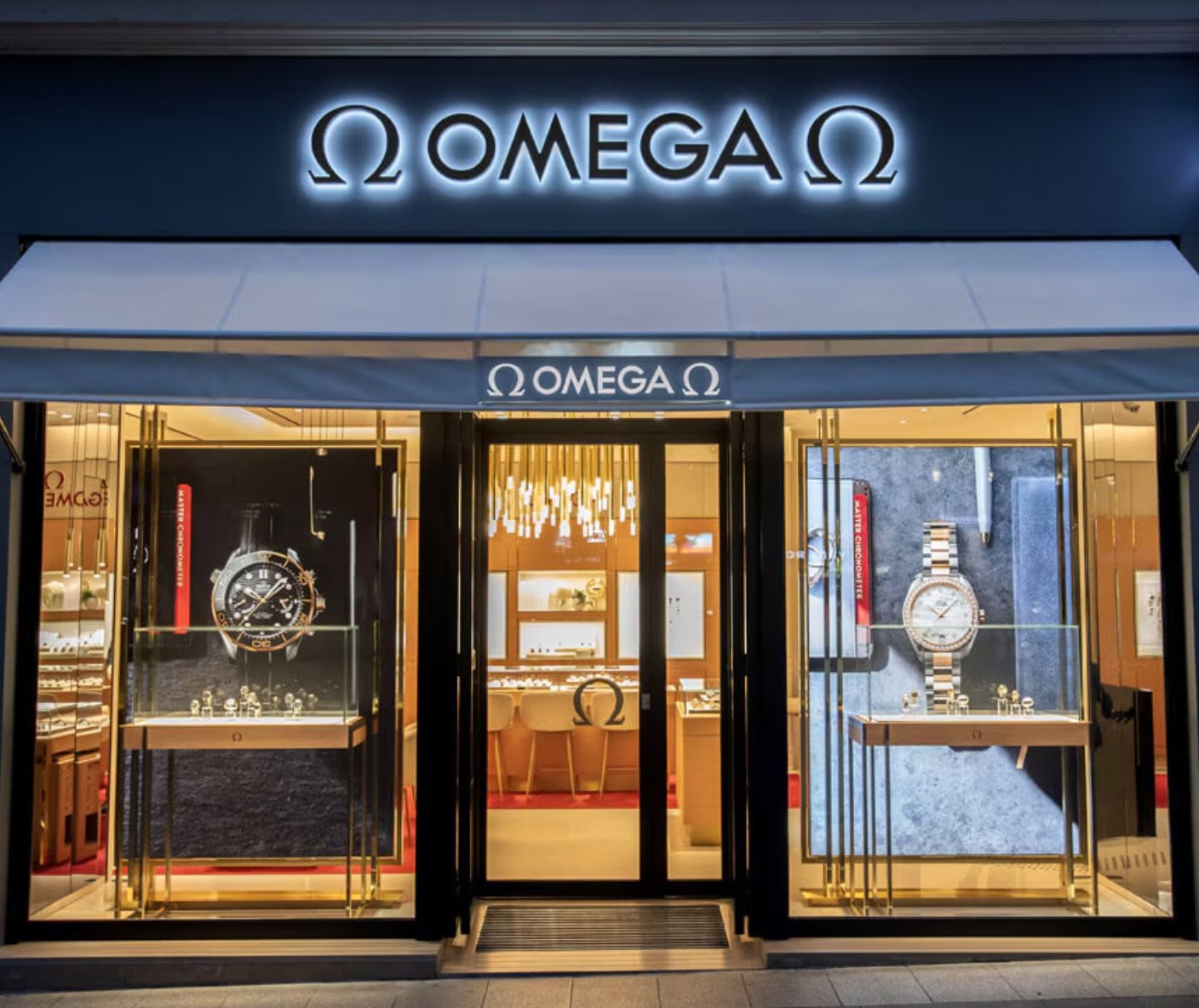
It is the most disturbing diagnosis in the Swiss Watcher report published by Morgan Stanley in February 2026, a piece of financial analysis known as sell-side, meaning produced by a bank for its investor clients, from estimates rather than audited accounts. According to Morgan Stanley and its partner LuxeConsult, Omega on its own is estimated to generate more than 100 per cent of the group’s watch profit. The figure looks absurd until you turn it over: if one brand produces more than a hundred per cent of the result, the others, taken together, destroy some of it. Again according to the same analysts, Longines, long the second pillar of the house, is thought to have moved into loss.
A guard rail is needed here. None of these per-brand margins is public. Swatch does not disclose the result of Omega or of Longines taken separately, and nobody outside knows them. These are analyst reconstructions, valuable as a reading grid, fragile as accounting proof. We cite them for what they are, argued hypotheses, never as audited truths.
The direction of the reasoning can still be checked elsewhere. Again according to Morgan Stanley, Swatch Group’s share of the Swiss watch market, measured by value, is put at around 16.1 per cent, in continuous decline since 2019. A group that owns sixteen brands and sees only one carry the results is not diversified. It is concentrated, with fifteen façades around its locomotive.
What the accounts say, not the estimates
Where the estimate stops, the disclosure begins. Swatch Group is a listed company: it files its accounts, and those are facts.
February’s snapshot was dark, and with reason. For the 2025 financial year the group reported a net profit of 25 million Swiss francs, down 89 per cent on the year, for an operating margin fallen to 2.1 per cent. That is the setting in which Morgan Stanley was writing. A group barely making money, one brand carrying all the rest, a shareholder base deaf to criticism. On that frozen snapshot, the activist thesis sounded self-evident.
Six months on, the film tells something else. In the first half of 2026 Swatch reported revenue of 3.12 billion francs, up 8.5 per cent at constant exchange rates, meaning once currency movements are stripped out. The strong franc did cut into the headline growth: at current rates the increase falls to 2 per cent, close to 200 million lost to the currency effect alone. Omega jumped 20 per cent in retail at constant rates, retail meaning direct sales to the end customer in the brand’s own boutiques, as opposed to deliveries to third-party retailers. Longines returned to double-digit growth, and the mid-range houses followed.
The group’s operating result remains thin: 52 million francs, down from 68 million in the first half of 2025, a margin of 1.7 per cent. But that aggregate figure hides the essential. The drag is the Production segment, those component factories Swatch refuses to put on short-time working and keeps paying in full while waiting for demand to return. Isolated from that industrial weight, the watches and jewellery division shows an operating margin of 9 per cent, rising to 15 per cent over May and June. The snapshot half buried the group. The film shows a machine restarting.
Longines reverses
The best symbol of that gap lies in one brand, Longines, the very one analysts saw sinking. Pilloried in 2025 for a move up-market judged too fast, the house had pushed its prices higher than its clientele would bear. It turned around. The HydroConquest, its entry-level diver, came back down to around 2,200 dollars, and sales picked up again.
It is the perfect illustration of the principle running through this whole series. An analyst report is a photograph taken at a given moment, with the prices and positioning of that moment. A company corrects as it walks. Between February’s snapshot and July’s half-year, Longines did not wait for Morgan Stanley’s permission to bring its prices back down.
A locked debate
There remains the underlying question, and it is political before it is accounting. Follow the activist reading and Swatch suffers from a gap between its asset value, what its brands and stock would fetch sold separately, and its earnings value, what today’s profits are worth. When the first far exceeds the second, an investor starts dreaming of a break-up: sell the loss-making brands, isolate Omega, release the sleeping value.
That dream meets a lock. Swatch has two classes of stock, registered shares and bearer shares, the first carrying far more voting rights per franc invested. The Hayek family holds enough to control around 44 per cent of the voting rights and occupy three board seats, while owning a minority of the capital. That mechanism explains the gulf of 12 May: the public may vote for Wood by more than 80 per cent, the arithmetic of voting rights gives the family the last word. Second attempt, second failure for the activist.
What this reveals
Swatch offers the textbook case of a company perhaps worth more broken up than alive, and made untouchable by a locked shareholder base. Both camps are right at the same time. Wood is right on the diagnosis: a group resting on a single profitable brand is vulnerable, and the market prices it below the sum of its parts. The Hayek family is right on the long run: it has already been through bleak cycles without dismembering the house, and the first-half rebound gives it, for now, the argument of reality.
What the affair reveals goes beyond Swatch. It shows that part of the value of a family-held watch group lies not in its accounts but in its capacity to refuse financial logic. As long as the family holds the voting rights, the question of a break-up will stay theoretical, an analysts’ debate that nothing will settle. Morgan Stanley’s photograph will have been right on paper and wrong at the ballot box.
There is a blind spot, though, in this recovery euphoria. To rebound, Longines had to come back down-market, Tissot and Hamilton to hold the bottom of the market. And it is precisely that bottom of the market the Swiss industry spent fifteen years deserting. That will be the subject of the next part: has the Swiss watch given up on beginners?
Sources: Swatch Group, half-year report 2026
Swatch Group, 2025 full-year results and key figures 2025
Swatch Group, voting results of the ordinary general meeting of 12 May 2026
Morgan Stanley and LuxeConsult, Swiss Watcher report, February 2026
Federation of the Swiss Watch Industry, statement on exports at mid-2026, 21 July 2026.
Research and writing assisted by Claude Code.