What a brand cannot open
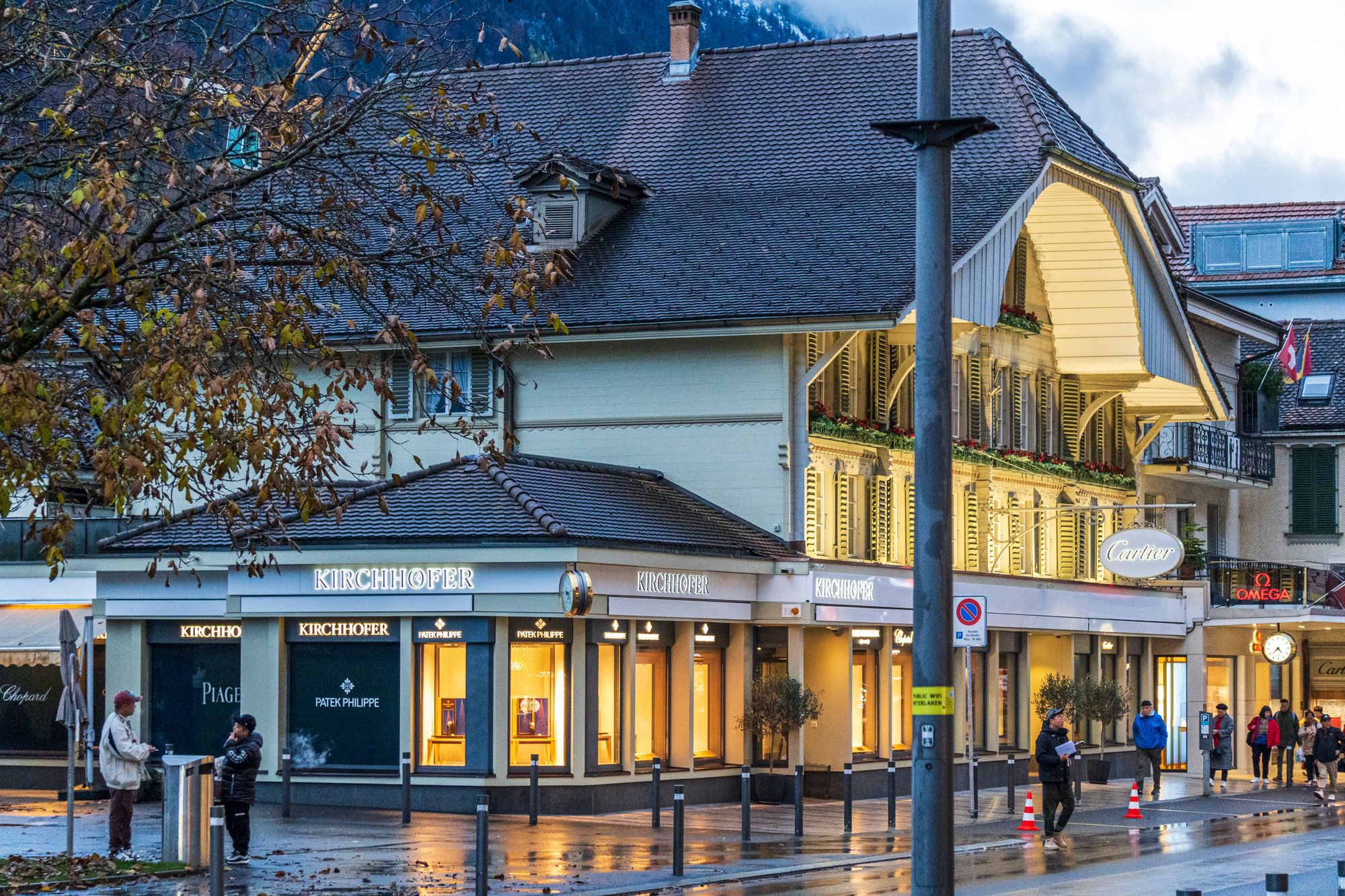
On 13 July 2026 a rumour was enough. Reuters reported that day that Watches of Switzerland, the largest London-listed seller of high-end watches, was in talks with buyers who would take it off the market. Nothing was signed, no offer was filed. Within the day the share rose 8 per cent all the same. The next morning the company published the best year in its history, 1.8 billion pounds of sales, and the market did not flinch.
Its chief executive, Brian Duffy, has an explanation, which Reuters has from sources close to the matter: if he listened to those buyers, it is because he believes stock market investors undervalue his company. The share is worth less than half what it was worth in 2022. So a market pays more for the idea that a retailer might be bought, by a fund or by a sector player, than for the proof that it makes money.
The question deserves stopping over, because it is trickier than it looks. What is a watch shop worth?
Three businesses behind the same window
We still file all of them under one word, the retailer. It now covers three trades with little left in common.
There is the brand’s own boutique. The sign above the door is the manufacturer’s, the price is its own, the salesperson wears its colours. Nothing that happens inside escapes it.
There is the reseller who owns only the window. A lease on a shopping street, fine fittings, and brands entrusted to them. They sell what they are granted, at the price they are set. The day a house decides to take its watches back, there is nothing left to sell.
And then there is the family house. An address held for three generations, customers whose first names and birthdays are known, a father who trained his son behind the same counter. This business sells watches like the others. It owns in addition something that is not for sale.
The whole of watch distribution rests on a single question: have watchmaking’s distribution networks begun an irreversible mutation, for better or for worse?
Why the brands want the counter
The movement is under way and nobody hides it. In August 2023, Rolex bought Bucherer, its oldest partner, a Lucerne house founded in 1888. The statement gave the reason: Jörg Bucherer, who owned it, had no direct descendants. For want of an heir the business changed hands, and it was the brand that held them out.
The interest is easy to understand. When a house deliberately produces fewer watches than the world asks for, whoever holds the counter has considerable power: they know the buyer, they manage the waiting list, they control their margins. For a long time the brands left that power to others without thinking about it. They think about it every day now.
So they open. In Düsseldorf, Rolex bought a building on the city’s finest avenue to install a two-floor boutique there, which Bucherer will run. In London, in Geneva, in New York, single-signature windows are multiplying. Watches of Switzerland, the archetype of the multi-brand shop, already counts 81 boutiques dedicated to a single house out of the 191 it operates.
What cannot be opened
You would expect the logical sequel: the brands take everything back, the independents fade away. This is where the figures refuse to follow.
Rolex sells its watches in around 1,360 points of sale worldwide. It holds fewer than one in ten of them itself. More than nine watches out of ten leave the brand through the hand of a merchant who does not belong to it, and nothing suggests it wants to change that. It is shrinking its network, aiming in time for 800 to 1,000 addresses, but it is not replacing it. The most powerful house in the sector, the one with the means to open a thousand boutiques tomorrow morning, chooses not to.
Because there are things you do not open.
Take Rüschenbeck, in Dortmund. The house was founded in 1904, it became the largest watch address in Germany, and Rolex decided to end their partnership on 31 December 2026, across all its branches, Tudor included. The loss of a concession on that scale ought to be a death sentence. Look at what the house did in October 2025: it bought the building next to its own, on the busiest street in the city, to install a space devoted to Patek Philippe. Losing the most sought-after brand in the world did not drain it of its substance. Its value was therefore not in the concession being withdrawn. It was in the address, in the customer file and in the hands that run the business.
Look again at what Watches of Switzerland did in January 2026, in Texas. The group bought 88 per cent of Deutsch & Deutsch, four shops held by the same family since the 1920s. It kept the name, and it kept the directors, who carry the founder’s name. You do not spend that money for four commercial leases: it was spent for people who know what their customers will be wearing in ten years.
That is what the Rolex statement said between the lines, three years ago, in mentioning the absence of an heir at Bucherer. A brand knows how to build a boutique in eighteen months. It does not know how to manufacture a family that has held a street for a century.
The second speed
There remains the third party, the one with nothing but a window. Its position is the least enviable of the three, and it is the one the market has in mind when it discounts the trade.
It has no historic address to point to, no clientele that would follow it if it moved, no descendants to take over. Its business rests entirely on brands lent to it that can be taken back. When a house tightens its network, the letter arrives there, and it has nothing to offer in exchange, no building to sell, no relationship to transfer elsewhere. The same decision, taken by the same brand on the same day, leaves one family house standing and floors the other.
That is how distribution runs at two speeds, and the fracture does not fall where it is usually looked for. It does not separate the big from the small, nor the brands from their resellers. It separates those who bring something the brand cannot produce itself from those who merely present its merchandise.
What this reveals
The first part of this series left the workshops of the Jura arc with no leverage at all: when a brand slows its orders, the subcontractor has nothing to set against it. At the counter the picture is more encouraging. Some of those who sell do own an asset the principal cannot reproduce, and that asset is paid for in cash when it changes hands.
Watchmaking is therefore not choosing between its boutiques and its resellers. It is redistributing the work. The brand takes back what it does better than anyone, that is holding its price, telling its story and rationing its production. The merchant keeps what the brand will never manage from Geneva: recognising a customer who comes through the door, selling them a rival house’s watch because it will suit them better, taking back their father’s, repairing it. The best addresses do both, housing brand boutiques and a section where you can compare under one roof.
For the buyer this recomposition is good news, because it gives them both houses that know how to stage their watches and merchants who still dare prefer one to another. On value, the verdict is already in. Rolex paid for Bucherer, Watches of Switzerland paid for Deutsch & Deutsch, and meanwhile London struggles to recognise the value of a retailer that makes money. Those who know this trade from the inside are buying exactly what the market cannot price.
One step remains. After the workshop that makes and the shop that sells, there is what nobody in this industry delegates to anyone: the name on the dial. That is the last part of this series. To be continued.
Sources: Reuters, exclusive report of 13 July 2026 on talks to take Watches of Switzerland private, and the share price that day
Watches of Switzerland Group, results for the year ended 3 May 2026, statement of 14 July 2026, and statement on the acquisition of Deutsch & Deutsch of 22 January 2026, thewosgroupplc.com
Rolex, statement on the acquisition of Bucherer, 24 August 2023
Morgan Stanley Research and LuxeConsult, “Swiss Watcher”, 18 February 2026, for Rolex’s distribution network and the Düsseldorf boutique
Blickpunkt Juwelier, 17 September 2025, for the end of the partnership between Rolex and Rüschenbeck
Ruhr Nachrichten, 22 October 2025, for the purchase of the Westenhellweg building in Dortmund.
Research and writing assisted by Claude Code.