Who is buying up the workshops of Swiss watchmaking?
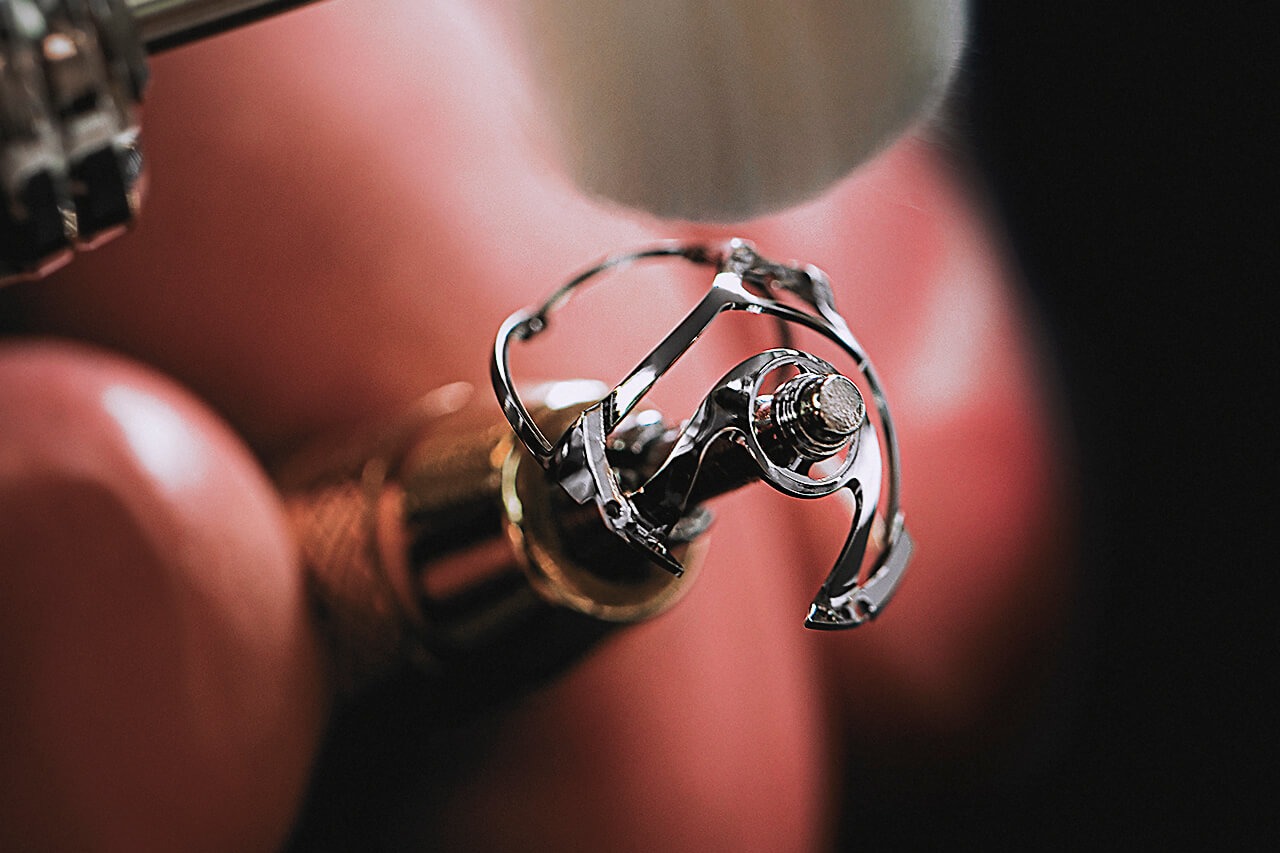
On 29 June 2026 the Italian investment firm Vam Investments announced the creation of Groupe Chaumont, headquartered in Neuchâtel. Four companies join it together. Two are in Bassecourt, in the Jura: Efteor, which makes cases and clasps in precious metals, and Le Composant, a specialist in oscillating weights and bracelets. Two are in La Chaux-de-Fonds: Télôs Watch, which develops movements and complications, and Henri Robert, a maker of precision cutting tools. Vam, founded and led by Marco Piana, has acquired them. Their entrepreneurs have reinvested part of the proceeds, become shareholders in the group and stay at the head of their workshops.
The group is led by Umberto Macchi di Cellere, former managing director of Bulgari Watches. The stated ambition is to become the industrial partner that brings the finest know-how together under a single Swiss banner. Vam presents it as a platform serving the leading Swiss high-end brands, one meant to take in further makers of specialised components. Taken on its own, the deal is modest and could pass unnoticed. But it comes after several others, and the trend may raise a question.
For close to twenty years, the dependence of brands on key suppliers had a name, Swatch Group, and a referee, the Competition Commission. The affair of the ETA movements ran from 2002 to 2020 (the story is told in our article “The three watch groups: who owns what, and why it steers the market”). On Nivarox assortments, the secretariat of the Commission, known as COMCO, opened a preliminary investigation in June 2021 and closed it in December 2022 without formal proceedings, while noting indications of an infringement. In both cases COMCO had a dominant supplier in front of it, against which it was able to invoke the ban on abusing such a position. Nothing suggests that any one of the owners that have appeared since holds a comparable place. The dependence, if there is one, is now spread across several hands.
Securing supply, or building to sell
The houses buy to guarantee their own deliveries. In August 2025 Audemars Piguet took a majority stake in Inhotec, in Le Locle, its long-standing supplier in micromechanics and precision machining. The founder, Alexandre Eme, remains chief executive, chairman of the board and a minority shareholder; the company keeps its name and its other customers, and says it intends to go on serving the whole of the watch industry. On 12 November 2025 LVMH took a minority stake in La Joux-Perret, in La Chaux-de-Fonds, which remains a subsidiary of the Citizen group. The manufacture has supplied solar quartz movements to TAG Heuer and Tiffany & Co. since 2022, and the relationship is to be extended to the group’s other watch brands. In both cases the buyer is first of all a customer that wants to secure its supply.
The case of Incabloc stands apart. In the spring of 2024 the maker of shock absorbers in La Chaux-de-Fonds changed hands. On 15 April 2024 the Swiss Official Gazette of Commerce published the departure of Wilfred Zutter from the board of directors and the arrival of six directors. According to our cross-checking, they include executives from the Rolex group, from Patek Philippe and from Richemont. It is, among the cases noted here, the only example in which competing houses sit together on the board of the same supplier.
The funds follow an entirely different logic. They gather complementary workshops, grow the whole and, more often than not, end up selling it: they are temporary owners. Deloitte counts around twenty supplier groups in the sector, at least four of them created or sharply accelerated since 2025, Chaumont being the latest. In the summer of 2025 Quilvest Capital Partners had taken control of Halphamicron, born of the merger of Vasconi, Imhof and TS Décolletage, with revenue, in euros, of some twenty million. On 26 September of the same year the GEI fund backed the launch of Horatec, which brings together Steiger Galvanotechnique, Stila and Titanium Engineering for 22 to 25 million francs. On 17 October Sienna Private Equity completed its investment in TEC Group alongside the founder, Arnaud Faivre.
Vam has a precedent in another trade. It was a shareholder in Gruppo Florence, an Italian grouping of contract manufacturers for luxury fashion formed in 2020. On 25 May 2023 funds advised by Permira announced that they were acquiring a majority, and Vam reinvested part of the proceeds. That precedent says nothing certain about the future of Chaumont, but it gives an idea of the timescale on which this kind of shareholder thinks.
Few suppliers, on the other hand, buy their neighbours. According to Deloitte, which surveyed 42 supplier executives, expanding by acquisition in Switzerland is a priority for only 7% of them. Half have cut permanent staff over the past twelve months and 45% have used short-time working, proportions that are down on a year earlier. The capital comes from elsewhere, and some founders take part in it, as at Chaumont. What it comes looking for goes beyond the machines: asked what helped them hold out, 71% of the same executives cite their long-standing relationships with key brands, and it is the factor most often cited. A relationship, though, rests on individuals. At Chaumont as at Inhotec or TEC Group, the founders stay in place.
A hypothesis, and what the law says
Could this concentration, in time, hamper independent watchmaking or the arrival of new brands on the market? We put the question as a hypothesis. At this stage no house has said it has been harmed, and none of the buyers has expressed any intention of shutting the door on anyone. Fabien Schirmer, chief executive of Ronda, sets out what is at stake from the suppliers’ side.
A strong Swiss watch industry needs strong independent suppliers. As the large groups become increasingly integrated, maintaining an open and competitive supplier ecosystem is essential for independent brands and for the diversity of Swiss watchmaking.
Fabien Schirmer, chief executive of Ronda, quoted by Deloitte, 2026
Who watches over that ecosystem? COMCO has expressed no public position on these deals, and the reading that follows is ours alone. The Cartel Act requires a concentration to be notified when the undertakings concerned together reach 2 billion francs in turnover, or 500 million in Switzerland, and when at least two of them each reach 100 million in Switzerland (Art. 9, para. 1). The undertakings concerned are those acquiring control and those over which control is acquired. A workshop with 20 to 25 million in turnover does not reach that amount: if it is taken over by a single acquirer, the condition is not met. Matters are different when several large acquirers take control together, since the threshold is then more likely to be crossed. The Act also provides for notification regardless of size when a legally binding decision has established that a participant is dominant and the deal affects that market or a neighbouring one, upstream or downstream (Art. 9, para. 4). A minority stake without control, lastly, is not a concentration (Art. 4, para. 3).
Most of these deals therefore do not fall under prior review. They remain subject to the law. Refusal to supply and price discrimination may amount to an abuse on the part of a dominant undertaking and, since 1 January 2022, on the part of an undertaking with relative market power, meaning one on which others depend for want of an adequate and reasonable alternative (Art. 4, para. 2bis, and Art. 7). The COMCO secretariat may open a preliminary investigation of its own motion or following a complaint by third parties (Art. 26). On 19 December 2025 Parliament adopted a partial revision that modernises the review of concentrations; it is not yet in force. Any review, if there were to be one, would therefore come after the fact.
What an independent can expect
It is quite possible that the promise will hold. Each of the three Horatec companies carries on under its own name, with its own teams and with unchanged commitments to its customers.
Nothing will change for our customers.
Samuel Estoppey, outgoing managing director of Steiger Galvanotechnique, 26 September 2025, translated from the French
A fund preparing a sale has, moreover, every interest in showing a broad customer list and not a captive workshop. For an independent brand, a supplier backed by a solid shareholder is better than a supplier that closes. The sign to watch is simple: do the workshops that have been taken over still open accounts for small customers, on the same terms as before?
The other outcome would come quietly, through sorting by size. Nothing would be refused. Small orders would come after large ones, or cost more, because a group that has to grow fast naturally leans towards volume. This is conjecture. It would show up in three indicators that every young brand knows by heart: lead times, minimum order quantities and prices.
And if the workshop changes hands again
A fund more often than not ends up leaving, and the identity of the buyer then matters a great deal. If it is another fund, as with Gruppo Florence, the platform has every reason to stay open, since its value lies in the number of its customers. If it is a major house, the tool could be reserved for its own needs. The case of Inhotec shows that a house can buy without closing the door: Audemars Piguet has left it its name, its autonomy and its other customers. The whole question is what such a commitment is worth over time, and what would happen if the shareholder’s needs were to grow significantly or the management were to change.
The case to follow is Acrotec. In December 2020 Carlyle announced the acquisition of this components group from Develier, in the Jura. In September 2024 the Bloomberg agency reported that the American fund had chosen its banks for a listing on the Zurich stock exchange planned for the first half of 2025. No listing has been announced since, to our knowledge.
What this reveals
The commitments made to customers rest on the word of the managers in place and on the interest of the shareholder of the day. Either can change, without anyone having broken their word.
Swiss law has provided, since 2022, for the case of dependence without a dominant supplier. Yet it steps in after the fact, and it assumes that a small brand reports the supplier it depends on, or that the authority takes up the matter itself. Were consolidation one day to weigh on the independents, the signal could therefore be slow in coming, and take the form of scattered clues instead of a decision.
We know where to look for those clues. They will be read in the identity of those who sign the next deals, and in what Carlyle does with Acrotec. They will also be read after 31 January 2027, the date on which the twenty-four-month compensation scheme for short-time working lapses, which we covered in “Two years of short-time working”. The end of the aid could put more workshops on the market. The names of those who come forward to take them over will show which of the two logics, that of the customer securing its supply or that of the investor assembling a group, is redrawing the upstream end of the industry. To be continued.
Sources: Vam Investments, press release of 29 June 2026 on the creation of Groupe Chaumont, vaminvestments.com
Permira, press release of 25 May 2023 on the acquisition of a majority stake in Gruppo Florence, permira.com
Audemars Piguet, announcement of its majority stake in Inhotec SA, August 2025, read in press coverage as the original release could not be found
Swiss Official Gazette of Commerce, notice of 15 April 2024 concerning Incabloc S.A., shab.ch, the directors’ positions being drawn from cross-checking that those concerned have not confirmed
Incabloc, company presentation, incabloc.ch
Citizen Watch Co., press release of 12 November 2025 on LVMH’s investment in La Joux-Perret, citizen.co.jp
Groupe Horatec, launch press release of 26 September 2025, horatec.swiss
Sienna Private Equity, investment in TEC Group completed on 17 October 2025, according to the note from the law firm advising on the deal, the original release not having been found
CFNews, articles on the formation of Halphamicron by Quilvest Capital Partners, 2025 and 2026
Deloitte, Swiss Watch Industry Insights 2026, Spotlight on the supplier universe, September 2026
Federal Act on Cartels and other Restraints of Competition (Cartel Act, SR 251), Art. 4, 7, 9 and 26, fedlex.admin.ch
Ordinance on the Control of Concentrations of Undertakings (SR 251.4), Art. 3, fedlex.admin.ch
Federal Council, statement of 27 May 2026 on the revision of the ordinances implementing the Cartel Act, admin.ch
Secretariat of the Competition Commission, Nivarox preliminary investigation, opened in June 2021 and final report of December 2022, according to ATS agency dispatches
Federation of the Swiss Watch Industry, acquisition of the Acrotec group by Carlyle, January 2021, fhs.swiss
Bloomberg, dispatch of 3 September 2024 on the planned stock market listing of Acrotec
Federal Council, statement of 27 May 2026 on the extension of the compensation period for reduced working hours, admin.ch.
Research and writing assisted by Claude Code.