Ebel, Journe and Chanel: the product, the product, the product
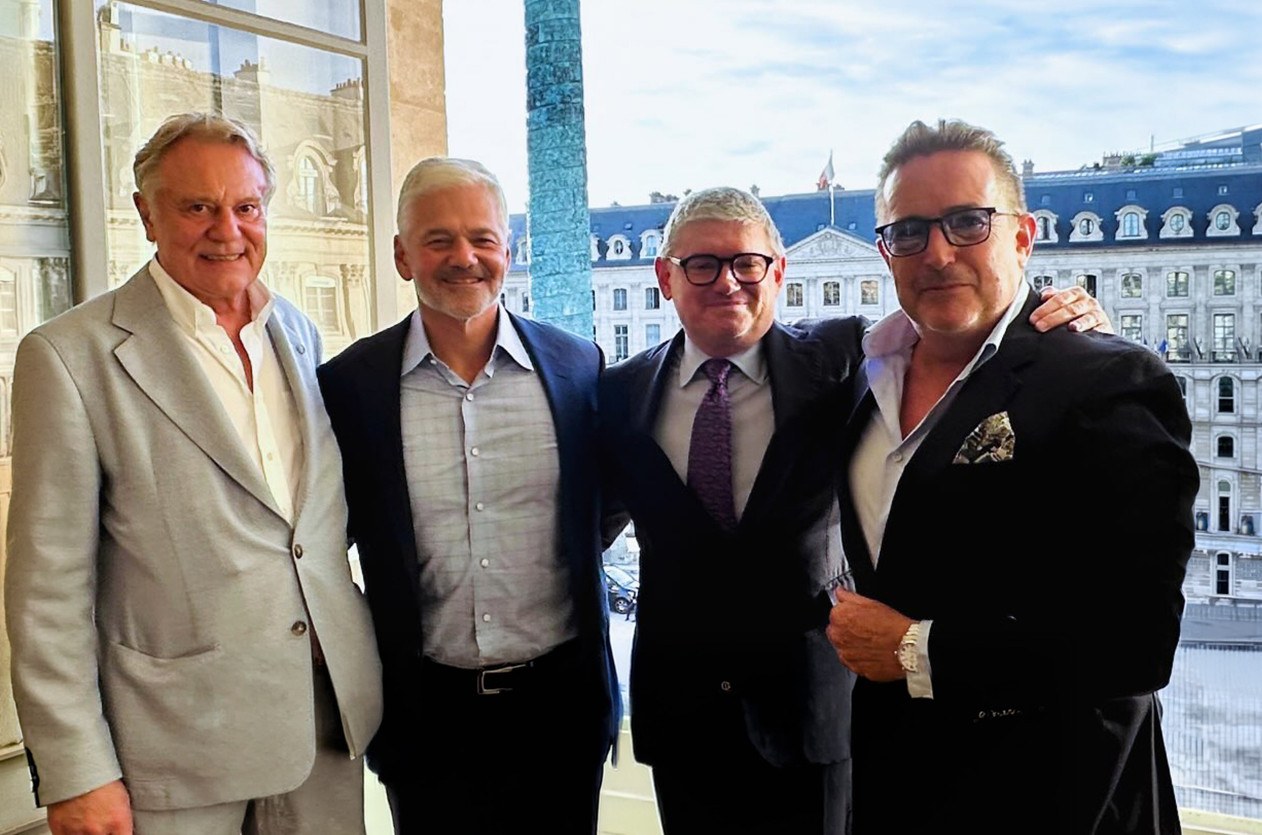
On 8 October 2026 Movado Group announced the sale of 95% of Ebel, for around 66.5 million dollars, to a group led by Montres Journe SA, the Geneva manufacture of François-Paul Journe. Chanel is joining the deal, as is Pierre Jacques, who ran De Bethune until the summer of 2025 and will become the brand’s chief executive. Let us dream a little, and sketch a few hypotheses about the future of a brand whose heritage and style are so distinctly its own.
Movado keeps 5%. The agreement is binding and the sale is due to close in the coming months. The two houses seem worlds apart. And yet François-Paul Journe is quite clear about what, as he sees it, unites them.
Like Michelangelo and so many others after him: the product, the product, the product. EBEL has always stood for exceptional product, and I am delighted to contribute to its next chapter alongside my friends and partners.
François-Paul Journe, founder of F.P. Journe, 8 October 2026
All three buyers spoke on the day of the announcement, but none has yet revealed what they have in mind for Ebel’s future: no collection announced, no timetable, no prices. How the shares are divided among them has not been disclosed either. Everything that follows is therefore hypothesis. And I put it forward with real enthusiasm, because this heritage is worth, to my mind, far more than the place it has held. All the more so because a brand of this quality so rarely finds owners like these.
A 1977 design waiting for its moment
Ebel has what many relaunched brands have to invent, or reinvent: a watch of its own. Pierre-Alain Blum, grandson of the founders, created the Sport Classic in 1977, with a monobloc case and a bracelet of wave-shaped links. Movado credits it with having helped to establish sport-chic in the late 1970s, and brought it back into the catalogue in 2017.
My most solid hypothesis, and the one I want to believe in: the work will start there. A period design, one that belongs to the house, one that does not need reinventing. It asks only to be made as well as its price allows. It all comes down to the bracelet, the case and the dial. On those three pillars Journe has a doctrine that makes me optimistic: the manufacture wanted to have its own dial workshops (Les Cadraniers de Genève) and case workshops (Les Boîtiers de Genève), based in Meyrin since 2012. When it gave them a new building, inaugurated on 26 June 2023, the manufacture specified that the investment was aimed at quality, and not at an increase in production. No link between these workshops and Ebel has yet been announced, but their very existence says how the man leading the group of buyers looks at a watch. It is hard not to dream of a Sport Classic made under his eye and to his philosophy.
Ebel once had its own calibre
In 1995 the house launched the 137, a chronograph designed for the 1911 collection, introduced in 1986. Pierre-Alain Blum had set up a production site capable of selling Ebel movements to other renowned brands. When Movado completed the acquisition, on 1 March 2004, Ebel was still assembling its watches on its own premises, in La Chaux-de-Fonds, where 175 people worked. Calibre 137 was eventually sold to Ulysse Nardin in 2012.
Today Ebel watches are assembled in Switzerland by independent subcontractors, and all of Movado Group’s Swiss mechanical movements come from a single supplier. This model is common at these price levels. What sets an Ebel apart lies elsewhere than in its movement.
Another hypothesis, which I put as a question: with a watchmaker at the head of the group of buyers, can Ebel’s mechanics come back onto the agenda? An in-house movement takes years and cannot be justified at every price. But between buying a movement off the shelf and designing one, there is a whole range of work, from the choice of supplier to the finishing, where a watchmaker’s eye can change the result profoundly.
Geography feeds the same hope. Once the sale has closed, Ebel will be the sole purpose of a Swiss company, which will receive the trademarks, the stock, the historic Villa Turque and part of the staff currently dedicated to the brand. And one of the three buyers is already on home ground in La Chaux-de-Fonds: Chanel has its watch manufacture there, where its watches have been produced since the Première of 1987. Imagine Ebel one day back at the bench in its home town, where its Le Corbusier house, a listed historic monument, is waiting for it. You have to admit it would make a fine story.
What if Ebel stayed in its price bracket?
That leaves the hypothesis that would be the most heartening, and also the boldest. To my mind, Ebel has no reason to become a second Journe. Two paths open before it. The first moves up the range in stages, as the product justifies it. The second leaves it in the category where Movado places it, between 1,300 and 9,900 dollars, and puts all the effort into making each watch there a better one. There is no way of telling which will be chosen.
The second is clearly the one I prefer. What is new in this deal is the eye: that of a watchmaker used to other prices, turned on watches in this range. An irreproachable Sport Classic, at a price an enthusiast can still contemplate, would be excellent news. Still, let us be realistic: quality comes at a cost, and it is reasonable to expect a price rise (fingers crossed).
Who is buying, and for how long
This week, in “Who is buying up the workshops of Swiss watchmaking?”, we described two kinds of buyer at work among the suppliers: houses securing their supply and funds building to sell. Ebel is a brand and not a workshop, but the same framework helps in reading the buyers: none of them is a fund. The lead buyer is a manufacture. Chanel has long taken minority stakes in watchmakers: Bell & Ross in 1998, Romain Gauthier in 2011, Montres Journe in 2018. Here it is backing a house in which it is already a shareholder. The incoming chief executive is himself among the buyers. Every light is green.
EBEL is one of the great names of Swiss watchmaking, with a rich heritage, a distinctive creative identity and a strong foundation for future growth.
Frédéric Grangié, President of Chanel Watches & Fine Jewelry, 8 October 2026
On 22 December 2003 Movado had announced it was taking over Ebel from LVMH for around 47.3 million dollars, or 61.5 million Swiss francs. Nearly twenty-three years later, 95% of the brand is changing hands for around 66.5 million dollars. The two amounts cannot be compared like for like: the scope of the two deals differs, and Movado does not report Ebel’s sales separately. Efraim Grinberg, chairman and chief executive of Movado Group, says he is entrusting the brand to owners able to unlock its full potential. Movado keeps 5% of the capital and so retains an interest in what comes next. For a brand that went from the Blum family to Investcorp in 1994, to LVMH in 1999, then to Movado in 2004, shareholders who settle in for the long term would matter.
One unknown remains, and enthusiasm is no excuse for leaving it out: distribution. Ebel is sold on a scale at which the Journe manufacture does not operate, through retailers and to customers who are not its own. The presence of Chanel and the choice of Pierre Jacques probably answer that question.
What this reveals
A watchmaking name is worth only what its owner makes of it. At Movado Group, Ebel was one brand among others, in a portfolio that runs from fashion licences to Swiss watchmaking. It now has the opportunity to become the sole project of a company created for it, led by people whose first word, on the day of the announcement, was for the watch.
The deal also puts a question to the sector. We already know the groups that collect brands and the funds that assemble them. Are we now seeing a different kind of buyer emerge, the auteur manufacture backed by a luxury house, taking over a dormant name to hold it to its own standards? One case does not make a trend, but the Journe and Ebel example is worth watching closely.
A few answers will be enough to tell. Where will the next Ebels be assembled, and by whom? Which movement will beat inside the first new watch from the new team? At what price will it come out? What will become of the Villa Turque: a backdrop, or a place of work? Each of these answers will say whether Journe’s word was a slogan or a programme. We lean towards the programme.
Sources: Movado Group, press release of 8 October 2026 announcing the sale of 95% of Ebel, distributed by Business Wire
Movado Group, Form 8-K filed on 8 October 2026 with the Securities and Exchange Commission, sec.gov
Movado Group, annual report (Form 10-K) for the fiscal year ended 31 January 2026, filed on 19 March 2026, sec.gov
Movado Group, press release of 22 December 2003 on the acquisition of Ebel from LVMH, sec.gov
Movado Group, annual report (Form 10-K) for the fiscal year ended 31 January 2004, sec.gov
Federation of the Swiss Watch Industry, “Ebel, The Centenary”, 25 October 2011, fhs.swiss
Historical Dictionary of Switzerland, entry “Ebel”, hls-dhs-dss.ch
Fondation Le Corbusier, entry on the Villa Schwob, known as the Villa Turque, La Chaux-de-Fonds, 1916-1917, fondationlecorbusier.fr
F.P. Journe, press release of 26 June 2023 on the inauguration of the building of Les Cadraniers and Les Boîtiers de Genève, fpjourne.com
Chanel, presentation of its watch manufacture in La Chaux-de-Fonds, chanel.com
Chanel, press release of September 2018 on the minority stake in Montres Journe SA, read in press coverage
De Bethune, announcement of Pierre Jacques’s departure from his executive role, relayed by the Federation of the Swiss Watch Industry on 26 June 2025, fhs.swiss
Ulysse Nardin, announcement of April 2012 on the acquisition of Calibre 137, read in press coverage, the original release not having been found.
Research and writing assisted by Claude Code.