Richemont's best watchmaker is a jeweller
On 13 November 2026 Richemont published its half-year accounts, and the second-largest brand on the Swiss watch market is not among its watchmakers. You have to look one division further along, with the jewellers, next to the rings and the necklaces. That is where Cartier’s watches are counted, in the branch with the highest profitability in the group. The filing looks like a matter for accountants. It nonetheless changes the answer to a question the industry has been asking since the market fell back: inside a large listed group, where does the watch still make money?
A good half for the watchmakers
Johann Rupert has no complaints about his watchmakers. In his chairman’s commentary he gives them a sentence of satisfaction, kept on a tight leash by caution.
Although recovery is unlikely to be linear in an environment that continues to be challenging for the industry, I am pleased to see our Specialist Watchmakers delivering growth for over a year now.
Johann Rupert, chairman of Richemont, half-year results, 13 November 2026
The accounts follow. The group’s specialist watchmakers (A. Lange & Söhne, IWC Schaffhausen, Jaeger-LeCoultre, Panerai, Piaget, Roger Dubuis and Vacheron Constantin) sold 1.7 billion euros’ worth between April and September, with Vacheron Constantin, Jaeger-LeCoultre and A. Lange & Söhne leading the growth. Their operating profit (what is left of sales once manufacturing, boutiques, communication and the houses’ own overheads have been paid for) tripled in a year to 150 million euros. Set against sales, that is a margin of 8.8%. Richemont puts the recovery down to higher sales and cost discipline.
The neighbouring division puts these results in perspective. Buccellati, Cartier, Van Cleef & Arpels and Vhernier generated 3.2 billion euros of operating profit over the same half, more than twenty times what the watchmakers made. Their margin reached 35.3%. For the same level of sales, the jewellery division therefore earns four times as much as the watch division. Both divisions benefited this half from one-off items linked to customs tariffs, but even with those stripped out, the ratio stays above four.
A surface reading of this might lead to a simple conclusion: jewellery pays, while the watch struggles to get its breath back. It is too simple, and only holds as long as you do not look at where Richemont files its biggest watch business.
Cartier on Richemont’s jewellery counter
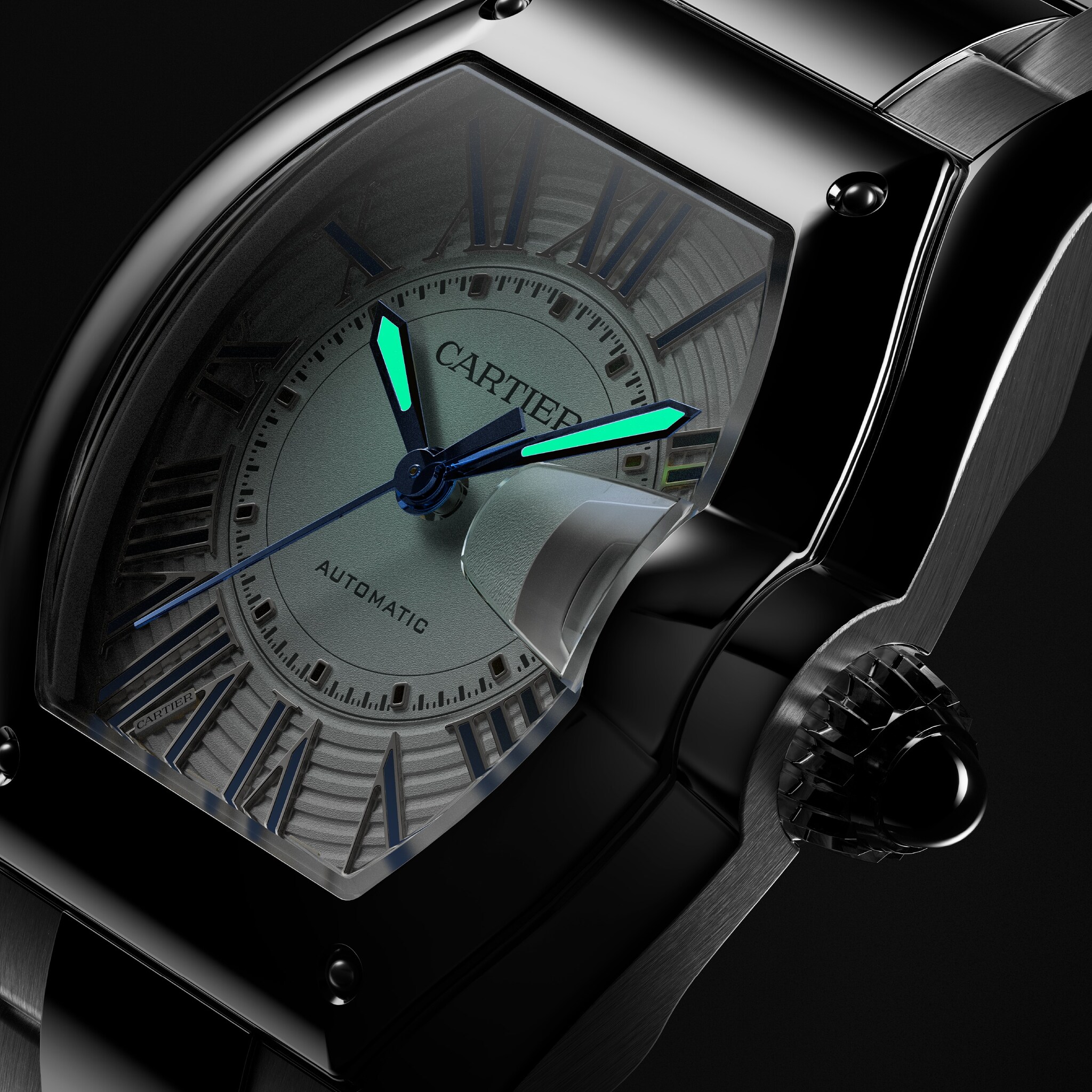
In its commentary on the jewellers, the group notes that jewellery and watches both performed strongly, and lists a new edition of the Cartier Roadster among the half’s novelties. Cartier’s watches are counted with the jewellers, whereas those of Vacheron Constantin sit with Panerai and IWC under the heading “Specialist Watchmakers”.
These watches are no sideline. According to Morgan Stanley and LuxeConsult’s estimates for 2025, Cartier is the second-largest brand on the Swiss watch market, behind Rolex. Its watches account for 8.7% of it. The same analysts put the share of all of Richemont’s Specialist Watchmakers together, for the same year, at 7.6%. The watches of a single jewellery house thus weigh more on the Swiss market than all of the group’s specialist watchmakers combined.
How much the Cartier watch earns on its own, Richemont does not publish, and nothing allows us simply to attach the margin of its jewellery division to it. The filing is still enough to move the dividing line. The published gap does not separate the watch from the jewel, it separates the watchmaker from the jeweller, and the group’s leading watch brand sits on the side that wins.
Morgan Stanley sees Cartier as the only brand in a listed group that keeps gaining share in a market dominated by privately held houses. The analysts put this down to an unusual combination: luxury legitimacy that nobody questions, and entry-level watches that are relatively accessible.
At LVMH, there is no border
LVMH does not bother with this split: it keeps watches and jewellery in a single division. The group published its nine-month sales on 12 October. Over that period its Watches & Jewelry division grew by 8% at constant scope and exchange rates. The group as a whole managed only 2% on the same basis.
To explain the lead, LVMH points to the very good performance of jewellery. It mentions Tiffany, Bvlgari’s new Eclettica line, which brings together high jewellery and prestige watches and achieved record sales, then Chaumet’s Bee de Chaumet. TAG Heuer appears only for its presence at Formula 1 Grands Prix. The only watches the group links to commercial success therefore belong to a high jewellery line.
Reading this as a rejection of watchmaking would go too far: a group highlights what it chooses, and a press release remains an exercise in communication. The story a group tells its shareholders shows where it sees momentum, and LVMH’s runs through jewellers’ watches.
What this reveals
The split between watchmakers and jewellers is a group convention, and it weighs on the diagnosis made of the industry. Measuring the health of the watch inside a listed group by the watchmakers’ column alone means leaving out the best-selling watch of any listed group, on the grounds that it is filed with the rings.
At Richemont as at LVMH, the watch gaining the most ground extends a name larger than itself. Hypothesis: it sells as an object of the house, in the same way as a ring, and benefits from a prestige it did not have to build alone. The accounts can neither prove nor rule this out, but they point that way.
That leaves the pure watchmakers. Facing Rolex, Patek Philippe, Audemars Piguet and Richard Mille, private houses that between them hold nearly half of the Swiss market and none of which publishes its accounts, the only brand in a listed group steadily gaining ground is a jeweller. Richemont’s seven specialist watchmakers are regaining colour, and Johann Rupert is pleased. Their challenge is of another order: to show that a watch can make a listed group a great deal of money without borrowing a jeweller’s name. This half, the accounts do not yet offer that proof.
Sources: Richemont, ad hoc announcement of half-year results to 30 September 2026, 13 November 2026
LVMH, press release “Continued growth in the third quarter of 2026”, 12 October 2026
Morgan Stanley and LuxeConsult, Swiss Watcher, February 2026, estimates of market share by brand and by division in retail value.
Author: Guillaume Prieur